In Sharm El Sheikh the reef starts where the sand ends. Walk to the end of a hotel jetty, put your face in the water and you're looking at coral, fish and the blue drop beyond. That closeness is what makes snorkelling here so easy to love, and also what makes a little care worth it: the reef is alive, the current is real, and the sun on your back is stronger than it feels. Here's where to go, what you'll see and how to stay comfortable.
Snorkelling from the shore and house reefs
Many hotels along the coast sit above a house reef, with a jetty or pontoon that runs out over the shallow reef flat to a ladder at the edge. Use it. Walking over the reef flat damages the coral and your feet, while the ladder puts you straight into deep enough water. Shore spots people often mention include Ras Um Sid, near the lighthouse, and Ras Nasrani, north towards the airport; Naama Bay has reef along its edges too. Ask at your hotel which way the current runs that day, and where to get out again before you get in.
Shore snorkelling is free and in your own time, and daynight doesn't sell it. What it can't give you is the outer reefs, the national park or a guide in the water. That's what the boat days are for.
Snorkelling by boat: Ras Mohammed and Tiran
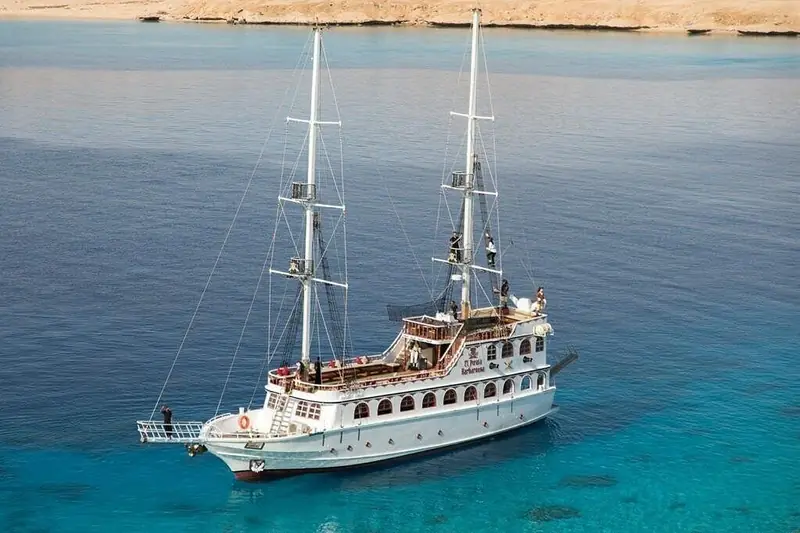
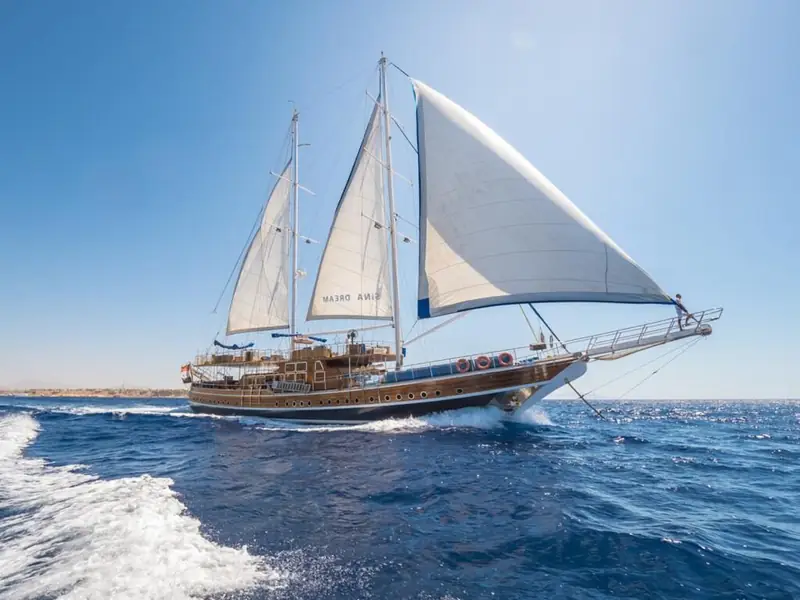
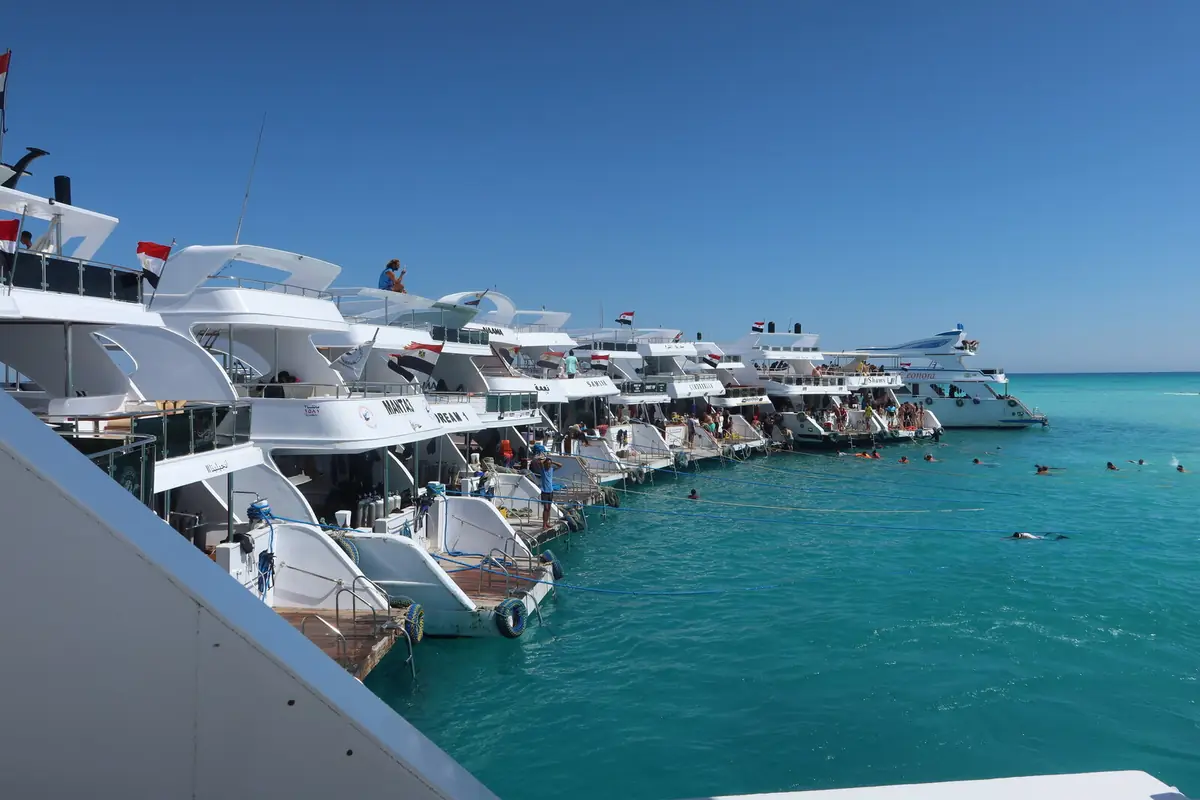
The two big snorkelling days from Sharm go in opposite directions. South is Ras Mohammed National Park, with reef walls, sheltered bays and the White Island sandbar. North-east are the reefs of the Strait of Tiran, in open water where the current can be strong. Our comparison of Ras Mohammed and Tiran goes through the choice in detail; here's the short version by the kind of snorkeller you are.
| Trip | Where | Gear | Suits |
|---|---|---|---|
| Ras Mohammed & White Island boat trip | Two park reefs, White Island | Included | First-timers, families |
| Ras Mohammed by road | Reef from the shore, beach time | Included | Anyone who gets seasick |
| Tiran Island snorkelling trip | Jackson and Woodhouse reefs | Bring your own | Confident swimmers |
| Tiran Island boat day | Tiran reefs, dive options | Hire on board | Mixed groups of snorkellers and divers |
On every boat day the crew chooses the stop on the morning, according to wind and current, and a guide snorkels with the group. That's worth more than any particular reef name. For the park itself, see our Ras Mohammed National Park guide.
Snorkelling boat days from Sharm
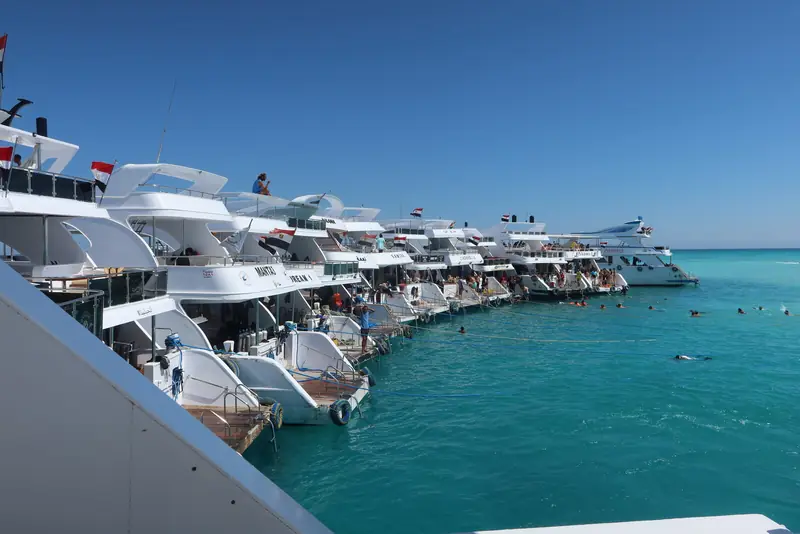
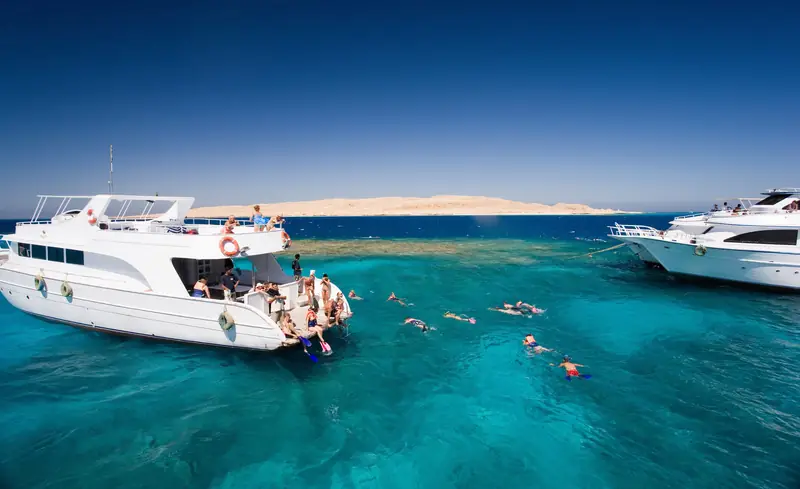
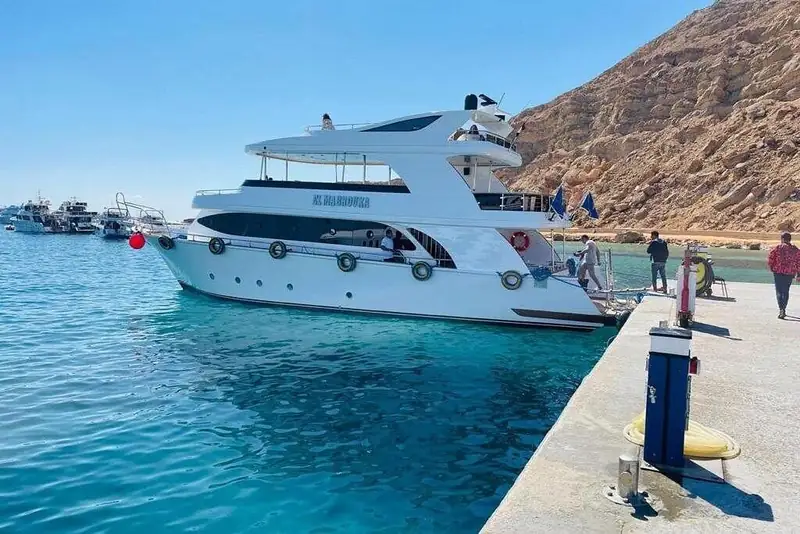
What you'll see
The Red Sea is home to around 1,200 species of fish, and a noticeable share of them are found nowhere else. You don't need names to enjoy them, but a few faces turn up on almost every reef: parrotfish crunching at the coral, butterflyfish in pairs, clouds of small orange anthias over the reef edge, clownfish in their anemones. Rays rest on the sand, and turtles and dolphins are sometimes seen, but nobody can promise them. Look at the coral itself too: hard corals like branching antlers and brain-shaped boulders, and soft corals that sway in the current.
How safe is snorkelling in Sharm?
Most days at sea here are calm and uneventful, and the risks are well known. Shark encounters are rare; UK travel advice notes that attacks are rare but have happened in the Red Sea region. The thing to respect every day is the current, which is why the crew picks the spot and a guide swims with the group. Standards also vary between boat operators, so it's worth knowing what to look for.
- A briefing before anyone gets in: where to swim, where the boat is, how to signal for help.
- Life jackets on board in sizes that fit your group, children included.
- A guide in the water with the snorkellers, not only on deck.
- Don't touch anything. Lionfish and stonefish have venomous spines, fire coral stings, and sea urchins hide in cracks.
- Stay with your group and look up every few minutes to check where the boat is.
- Cover up: a rash vest or an old T-shirt protects your back on a long snorkel.
Non-swimmers and children
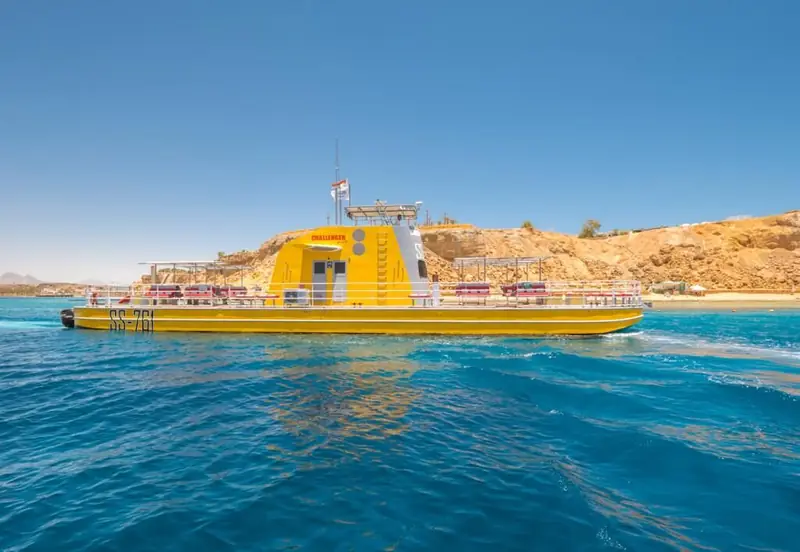
You don't need to be a strong swimmer to snorkel here. With a life jacket you float without effort, and a guide can tow a nervous swimmer by the ring. Start in shallow water, such as the White Island sandbar on a Ras Mohammed day, before trying the reef edge. If someone in the family would rather not get wet at all, the reef can be seen through glass: the glass boat reef trip in Naama Bay and the glass-bottom boat each take about an hour, and the submarine tour goes below the surface with large viewing windows.
What to bring, and do you need your own mask?
Gear is included on some trips and not on others. The Ras Mohammed boat trip with White Island and the by-road trip include it. On the Tiran snorkelling trip and the Ras Mohammed boat day with Italian and Russian guides you bring your own. On the shared boats with dive options you can hire gear and wetsuits on board. If you snorkel more than once, your own mask is worth it: it fits your face, and you know it's clean.
- A mask that seals when you breathe in through your nose with the strap off, and a snorkel.
- Fins if you have them; they make the current much easier.
- A rash vest or long-sleeved top, a towel and a hat.
- In winter, when the sea is about 21–23 °C, a shorty wetsuit. By August the water is around 28 °C and you won't need one.
More ways to be on the water, from glass boats to parasailing, are on the boat trips and water sports page, and the whole range of days out is on things to do in Sharm El Sheikh.
questions, answered
Is snorkelling in Sharm El Sheikh safe?
With sensible habits, yes for most people. Snorkel with a guide, wear a life jacket if you're unsure in the water, don't touch the reef, and check that your boat gives a briefing and carries life jackets.
Are there sharks in Sharm El Sheikh?
Sharks live in the Red Sea, but encounters with snorkellers are rare, and UK travel advice describes attacks as rare. The current is the bigger everyday consideration.
Can non-swimmers snorkel?
Yes, in a life jacket and with a guide close by, starting in shallow water. A glass-bottom boat or the submarine shows the reef without getting in.
Is it better to snorkel in the morning or the afternoon?
The morning, usually. Wind tends to rise after lunch and makes the surface choppier, which is why boat days leave early.
Do I need a wetsuit in winter?
Not to swim, but for a long snorkel a shorty wetsuit makes the sea, about 21–23 °C in winter, much more comfortable.